

Five Guys did not struggle in Germany because the burger was wrong. They struggled because the playbook was copy pasted.
And that became a $60M mistake.

Burgers and fries are not magic.
They are comfort food.
That is exactly why context matters: when the product is familiar, people are not really buying the ingredients, they are buying the reason to choose you again. Same burger, different culture, different “why.”
Jägermeister’s US expansion is a clean reminder: the liquid stayed the same, but the story, serving ritual (ice cold), and audience changed and the market opened up. The product did not need a redesign. The decision-making did.
Germany is a tough place to win with “premium fast food” unless the premium is instantly obvious. When people already know the local alternatives, familiarity stops being a moat and becomes a comparison trap.
Chains win on certainty, especially with travelers. But in your own neighborhood, certainty is not enough. You either differentiate clearly, or you overdeliver in a way that feels worth the price without needing a long explanation.
And no, “best burger in town” from a newspaper in another country does not move a small town in Germany.
So the better question was never “How do we roll out perfectly?” It was: “What must be true in Germany for people to happily pay this, rebuy it, and tell a friend?”
If you do not ask that early, you end up paying $60 million in tuition, in public.
Make better decisions,
Henry
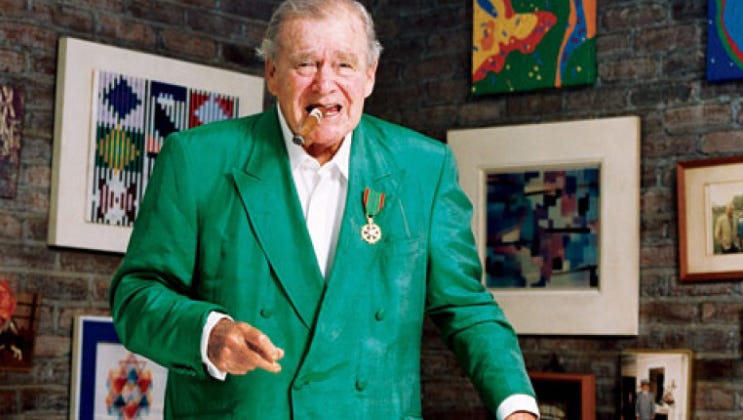
Sidney Frank took Jägermeister to the US
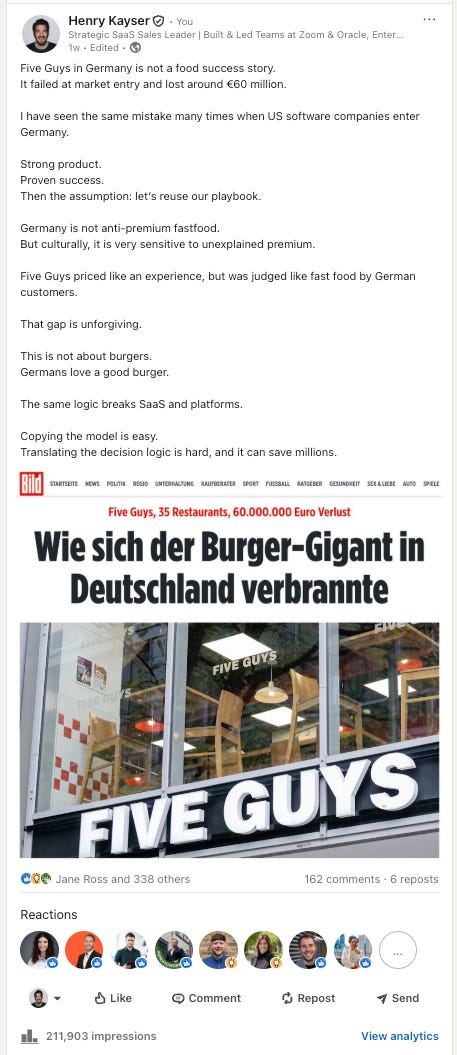
My LinkedIn post to this topic.
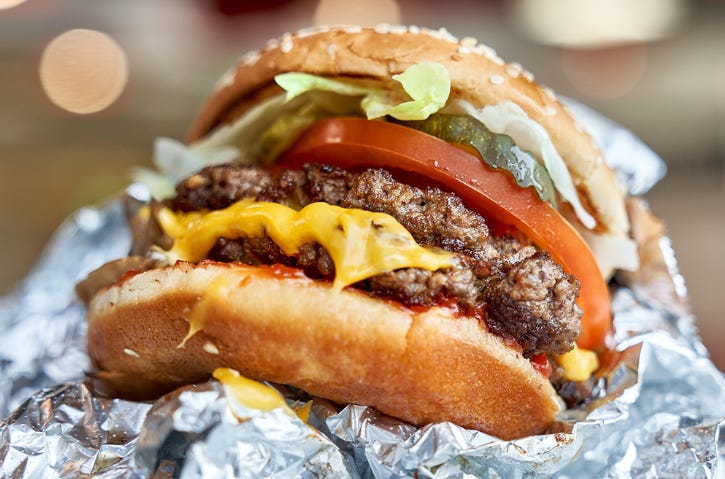
Picture from https://fiveguys.de/about-us/